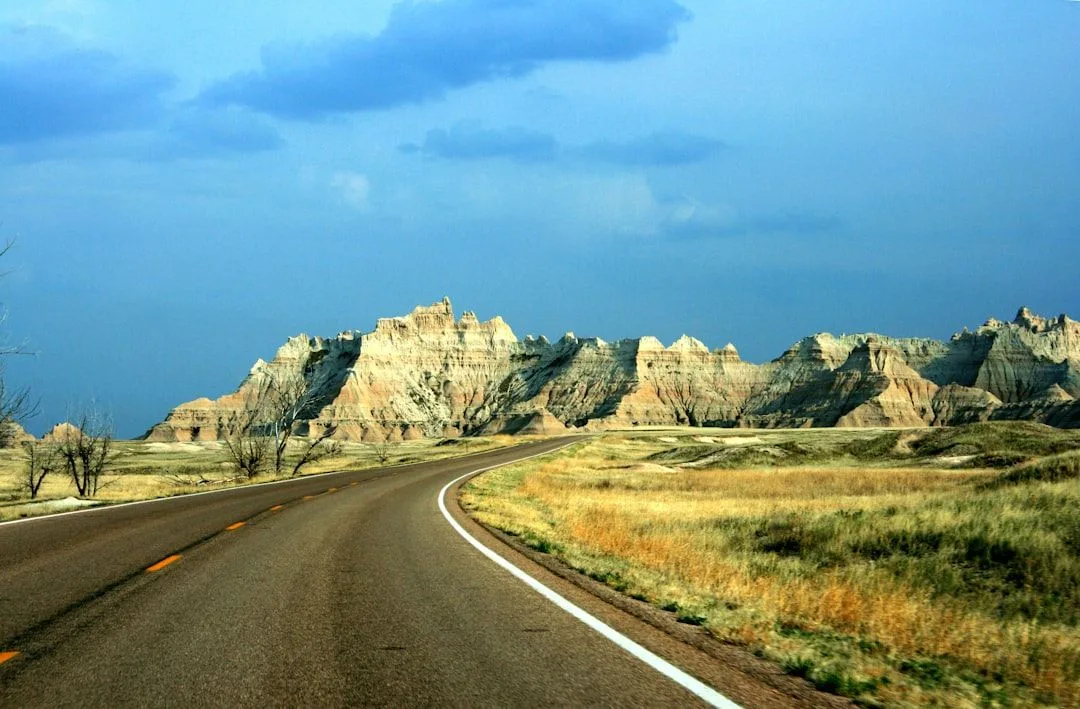
A cross-country drive is mostly transit. The trips that work accept that as the premise rather than discovering it in Nebraska.

The honest timings
| Route | Distance | Realistic | Minimum |
|---|---|---|---|
| US coast to coast | ~4,800 km | 3 weeks | 5 days, seeing nothing |
| Perth–Sydney | ~4,000 km | 2–3 weeks | 5 days |
| Lisbon–Istanbul | ~4,000 km | 3 weeks | 6 days |
| Nordkapp–Gibraltar | ~6,000 km | 4 weeks | 8 days |
The minimum column is a driving marathon rather than a trip, and people do it, and it is a different activity.
Structuring weeks of transit
Cap driving at five to six hours even on transit days, which is higher than a scenic trip and lower than the temptation.
Stop every two hours regardless of how you feel. Fatigue accumulates and does not announce itself.
Swap drivers where possible, and register the second driver on the rental agreement properly.
A full rest day every four or five days. This is the thing that separates a three-week drive that works from one that becomes an endurance event.

The US crossing
The interstates make it fast and dull. The interest is in the deviations.
The northern route — through the Badlands, the Black Hills, Yellowstone and the Tetons.
The central route — Route 66's surviving alignments, the southwest parks.
The southern route — Texas, New Mexico, and into California via the desert.
The plains are long. Nebraska, Kansas and eastern Colorado are hours of the same view, and that is worth knowing before starting rather than after.
The Nullarbor
The Australian crossing between Norseman and Ceduna, including a 146 km straight stretch, the longest in the country.
Two to three days.
Fuel stops are far apart and expensive; carry water and check the gaps. Mobile coverage is patchy to absent.
Wildlife on the road at dawn and dusk — kangaroos, and road trains that do not stop. Driving in those hours is genuinely dangerous and locals avoid it.
The Great Australian Bight cliffs are the reason to do it, and the whale watching at the Head of Bight in season.

Europe end to end
Easier than it sounds, because the distances are shorter and the roads are dense.
Tolls vary by country — ticket-based in France and Italy, vignettes in Switzerland, Austria and several central European countries, automatic in Norway and Portugal.
Check the vignette requirement before crossing each border; fines are issued for driving without one and they are enforced.
Low-emission zones in most large cities, with camera enforcement.
Practical
One-way fees on a transcontinental rental can be very large. Price it early.
Tyres and servicing — check both before a long drive, since a failure in remote country is expensive and slow.
Download offline maps for the whole route, not just the remote parts.
Accommodation can be booked a day or two ahead on transit sections and should be booked far ahead near parks and in small towns.
Whether to do it
It depends on whether you enjoy driving as an activity.
Long transcontinental routes are mostly transit through unremarkable country. People who love them love the driving, not the destinations — which are usually reachable more efficiently by air.
That is a legitimate reason to do it, and it is worth being honest about before three weeks in a car.