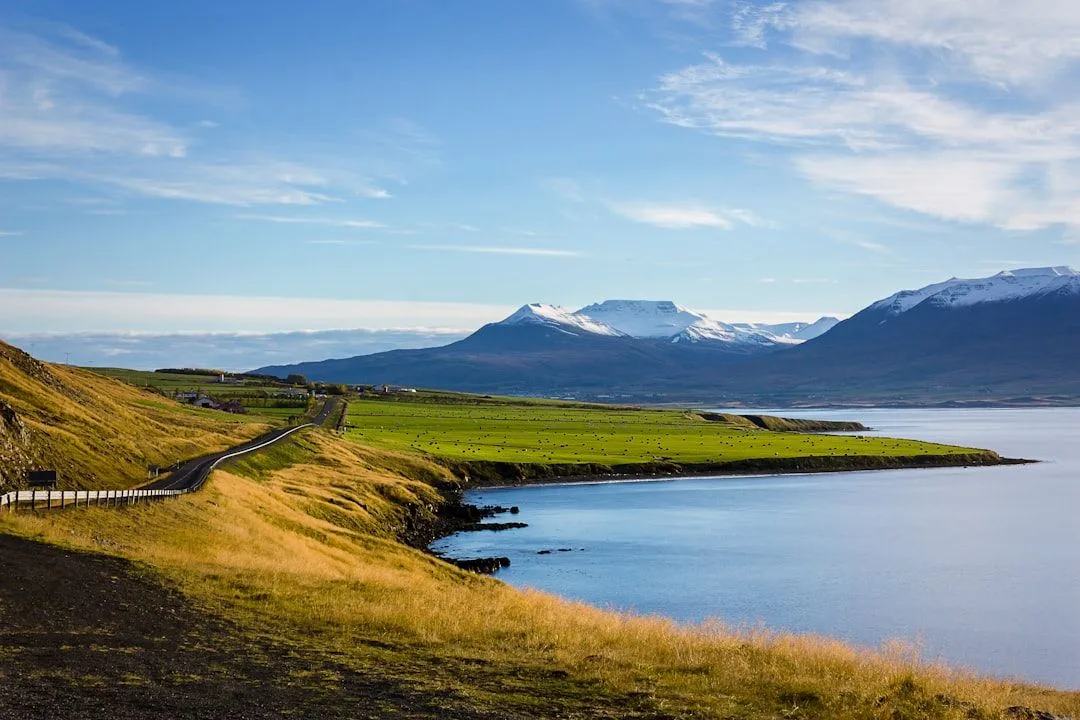
Route 66 was officially decommissioned in 1985. Driving it now means deliberately leaving the interstates that replaced it, and that difficulty is the whole character of the trip.
Following a road that is not signed
Large sections survive as state and local roads signed as Historic Route 66. Others are frontage roads beside the interstate, and some are gone entirely.
Several alignments exist from different decades — the route was rerouted repeatedly between the 1920s and 1960s, so there is no single correct path.
Standard navigation apps will route you onto the interstate at every opportunity, which is exactly what you are trying to avoid.
A dedicated guidebook or app is effectively necessary. The well-known turn-by-turn guides exist because the road does not navigate itself.
How long
Two to three weeks for the full 3,900 km from Chicago to Santa Monica if you stop.
It can be driven in a week by staying on I-40 and I-55, which misses the entire point.
The historic alignments are slower than the highways beside them — that is why they were replaced.
The states
| State | Character |
|---|---|
| Illinois | Chicago start, small towns, diners |
| Missouri | Ozarks, caves, old bridges |
| Kansas | Only 21 km of it |
| Oklahoma | The longest drivable stretch |
| Texas | Panhandle, Amarillo, Cadillac Ranch |
| New Mexico | Santa Fe, Albuquerque, long intact sections |
| Arizona | The best surviving stretch |
| California | Mojave, then Santa Monica |
The best section
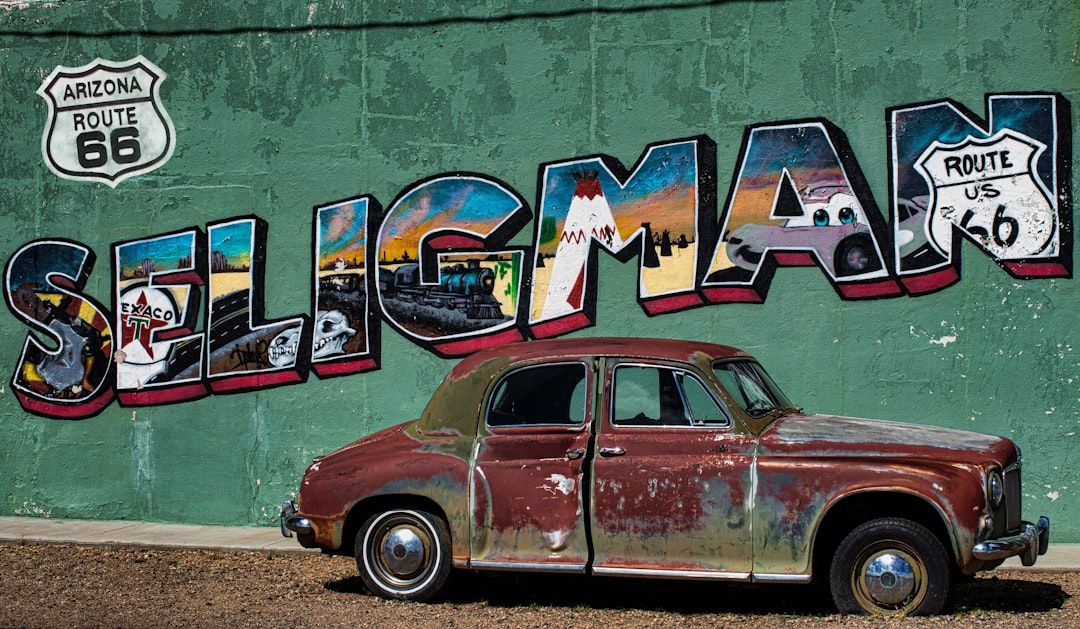
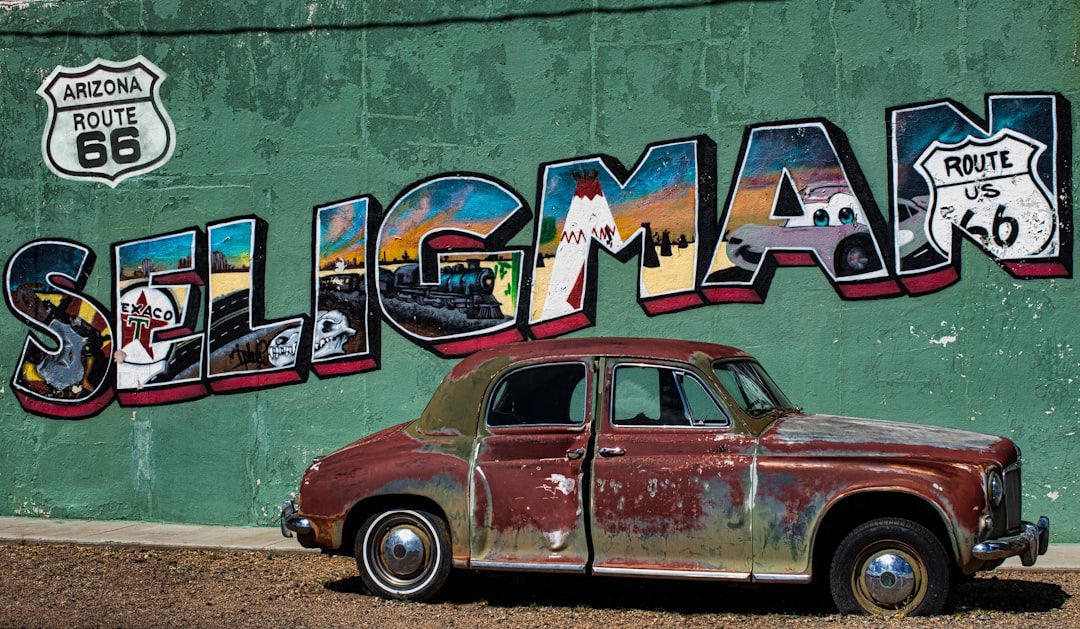
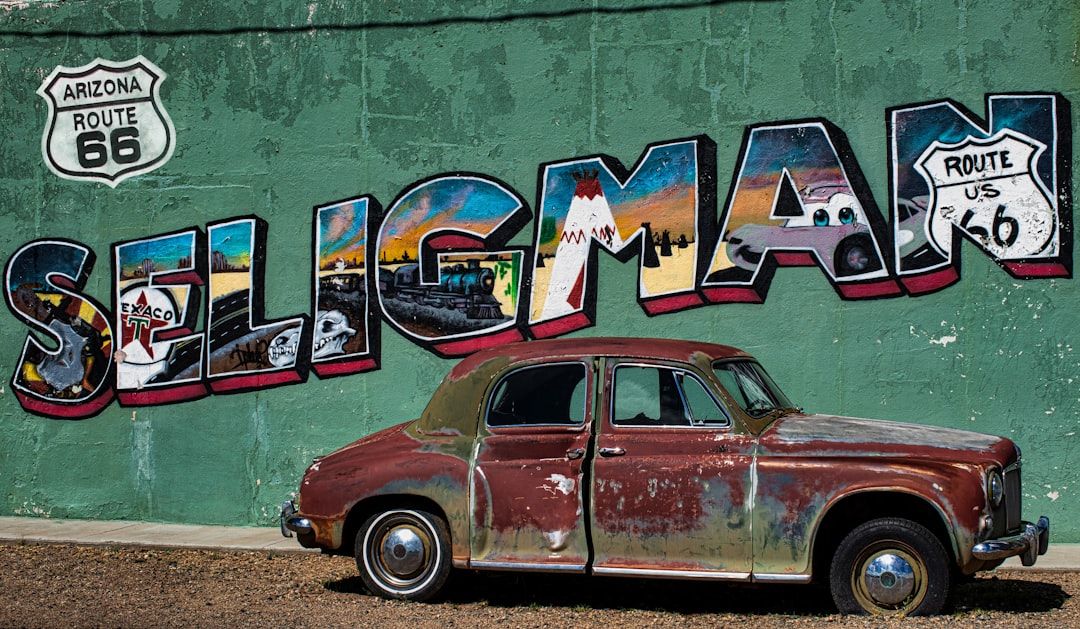
Arizona between Seligman and Kingman — the longest continuous surviving stretch, bypassed entirely by I-40, which is why it survived.
Seligman itself is where the historic route preservation movement started.
Oatman, further west, is a former mining town with wild burros wandering the main street, reached by a winding mountain road that the interstate replaced for good reason.
New Mexico and the Texas panhandle hold the other long intact stretches, with the neon and roadside architecture the route is known for.
What the trip actually is
Worth being honest about.
Much of Route 66 runs through towns the interstate killed — boarded-up motels, abandoned gas stations, and communities that lost their reason to exist when the traffic was diverted.
That decline is the subject of the drive as much as the neon is. The preserved diners and motor courts are the survivors of something that mostly did not survive.
Anyone expecting a continuous theme-park nostalgia strip will find long empty stretches instead.
Season
Spring and autumn.
Summer in the Mojave and the Texas panhandle exceeds 40°C, and winter closes some mountain sections and brings snow to the plains.
May and September are the reliable months.
Practical
One-way rental fees from Chicago to Los Angeles can be substantial — price it before assuming.
Book motels in small towns ahead, since some have only one or two.
Fuel in the western stretches — fill at half a tank.
Carry water across the Mojave, and do not rely on mobile signal.